

What's going on beneath Taihape? Council investigates wastewater network
When it rains heavily in Taihape, there's a lot more water flowing through the town's wastewater network than there should be.
November 04, 2026
And we're not talking about a little bit extra, either!
Rangitīkei District Council has been investigating what's known as inflow and infiltration (I&I), which is when rainwater and groundwater find their way into the wastewater network through incorrect connections, damaged pipes, leaking joints and other openings.
Normally, the network carries wastewater from homes and businesses to the wastewater treatment plant. But when large amounts of rainwater enter the system, it puts additional pressure on both the pipes and the treatment plant.
To put that into perspective, Taihape has a population of around 1,500 people, but during heavy rainfall, the volume of water flowing through the wastewater network can be equivalent to that generated by a town of around 7,000 people!
That's more than four times the amount of wastewater we'd normally expect from a town the size of Taihape.
And that's a lot of extra water for a system that wasn't designed to carry it.
So, what have we found?
Council has been carrying out property inspections and using CCTV cameras to investigate the underground wastewater network.
These investigations have identified approximately 60 properties with visible issues that could allow stormwater to enter the wastewater system.
Common issues include roof downpipes directing rainwater into wastewater gully traps, and gully traps that are low enough for surface water to flow into them.
Some of these issues may have existed for many years, meaning property owners might not even know there's a problem.
Some repairs will be relatively straightforward, while others will require further investigation and planning to determine the best solution.
And it's not just private properties we're looking at. Our CCTV investigations have also identified issues within Council's public wastewater network that we'll be working to address.
By addressing issues across both private properties and the public wastewater network, we're aiming to reduce the overall amount of unwanted water entering the system.
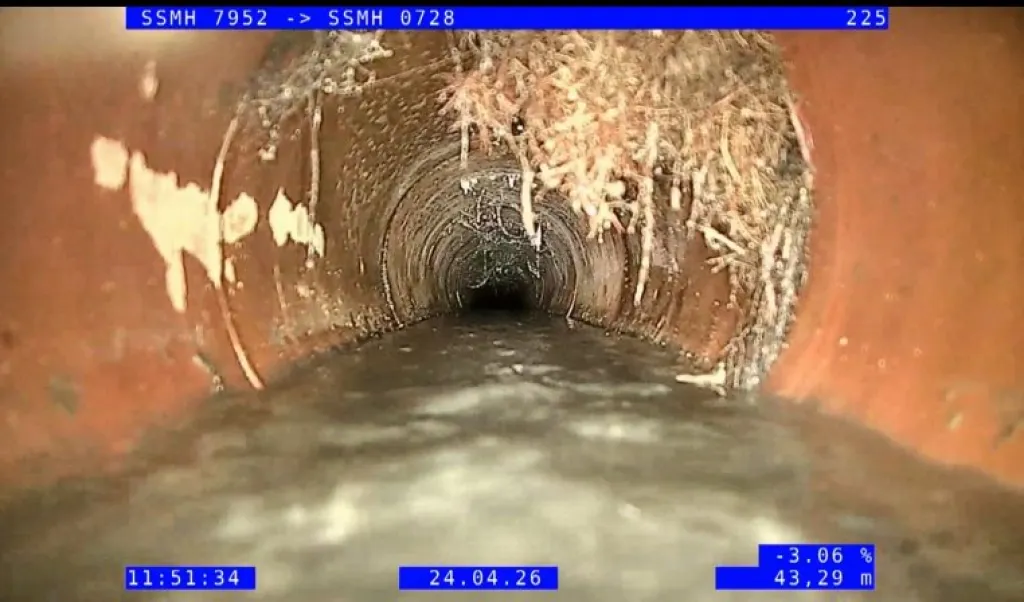
As well as stormwater, groundwater can get into the wastewater newtork through loose pipe connections. Signs of loose connections can include vegetation penetrating the pipes like in this image here.
What happens next?
Over the coming weeks, Council will be writing to property owners where potential issues have been identified.
These letters will explain what's been found during the inspections, why it matters, and what steps property owners can take to address the issue.
We recognise that some of these issues may have existed for a long time, and property owners may not have been aware of them.
Our focus is on helping residents understand what's been identified and what needs to happen next.
For now, there's nothing residents need to do.
If an issue has been identified on your property, we'll contact you directly with further information.
If you don't receive a letter, no action is being requested from you as part of this stage of the investigations.
Why does this matter for the network's future?
Reducing the amount of stormwater and groundwater entering the wastewater network isn't just about fixing individual pipes and connections.
It's also about making better use of the infrastructure Taihape already has.
The information gathered through these investigations will help Council understand where improvements are needed and inform longer-term planning for the town's wastewater network and treatment plant.
Reducing inflow and infiltration could also help reduce the scale of future wastewater infrastructure upgrades, although those decisions are still being worked through.
In the meantime, addressing the issues we've identified is an important step towards improving the performance and resilience of the Taihape wastewater network.
Because every litre of stormwater that stays out of the wastewater network helps Taihape make better use of the infrastructure it already has.
We'll continue to keep the community updated as this work progresses.