

Central Districts Water governance framework reinforces local control
December 11, 2025
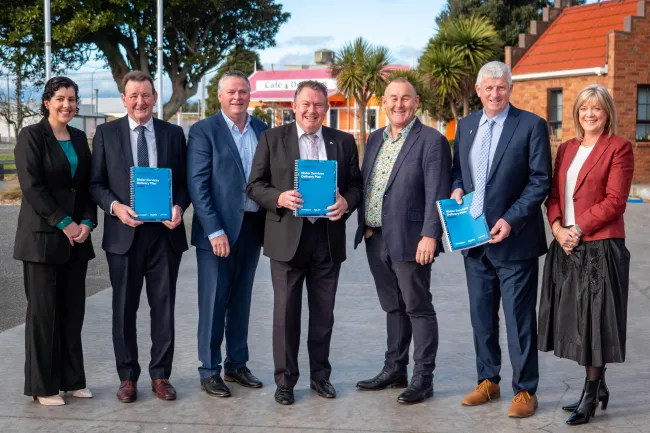
Horowhenua District Council, Palmerston North City Council and Rangitīkei District Council have taken a major step toward establishing Central Districts Water, confirming the governance framework that will ensure water services continue to be locally overseen, locally managed and locally accountable.
All three councils this week approved the Constitution and Shareholders’ Agreement for the new jointly owned water services organisation. This follows the councils’ decisions in the middle of the year to establish a jointly owned and controlled water organisation as part of their approach to implementing the Government’s Local Water Done Well legislation, and last month’s Government approval to proceed. With this week’s decisions, the councils have now put in place the core governance and oversight settings required to move into the next stage of establishment.
The two key documents describe how Central Districts Water will be governed, how the three councils will collectively exercise oversight, and how mana whenua will participate directly in decision-making. They also set out the structure for appointing an independent, skills-based board that will be responsible for operational performance and long-term planning.
Horowhenua District Mayor Bernie Walden says this week’s decisions can give communities confidence that councils will continue to guide water services on their behalf.
“Our residents want to know that their council still has a real say in how water services are run. This governance structure we’ve all agreed to keeps community views at the centre, while making sure we have the right tools to plan for the long term.”
How the new water organisation will be governed
A Shareholder Committee will act on behalf of the three councils. Each council will have three representatives: one elected member, one appointed member (likely another Elected Member) and one mana whenua representative nominated through Ngā Tapuwae o Hau. Ngā Tapuwae o Hau is the collective of iwi whose rohe sit within the Horowhenua, Palmerston North and Rangitīkei areas.
The Committee will be chaired by an independent, non-voting chair and will usually meet quarterly.
The Shareholders’ Committee sets expectations and provides oversight. It appoints the board of directors, agrees the Statement of Expectations and gives direction on long-term strategy for water services across the region.
Palmerston North City Deputy Mayor Debi Marshall-Lobb said the governance model strengthens both democratic oversight and long-term planning.
“As councils we carry the voice of our communities, and this structure keeps that voice firmly in the room. It also gives the new organisation the independent expertise it needs to manage a complex service well.”
The organisation’s board of directors will operate independently of the councils. Five directors will be appointed for their skills and experience, and all must be fully independent. Directors will serve terms of up to three years, with a maximum of three terms, and will meet at least ten times a year to oversee major operational, financial and investment decisions.
The board will appoint a Chief Executive to manage the day-to-day running of Central Districts Water, lead staff and deliver the services and investment programme set by the board.
This structure keeps high-level direction and ownership with the councils, through the Shareholder Committee, while enabling the board and Chief Executive to bring the professional expertise needed to operate the complex, regulated service water services.
Dividend settings confirm focus on reinvestment and community benefit
In some parts of the country, councils receive dividends from certain council-owned organisations, such as ports or airports, which help fund other council services. The three councils have all agreed that Central Districts Water will not operate in this way, with the Constitution stating there will be no dividends paid to the shareholder councils.
Rangitīkei District Mayor Andy Watson said a major focus of recent water reforms has been the need for sustained investment in water infrastructure and the rising cost of maintaining and upgrading ageing networks.
“Keeping all funding within the water system supports this goal. It means every dollar collected for water services will be used directly for maintaining, operating and improving drinking water, wastewater and stormwater infrastructure across the region, rather than contributing to wider council budgets. This model guarantees that investment stays focused on the network and on delivering reliable services for our communities.”
As part of the Local Water Done Well legislation, Central Districts Water will also be overseen by two national regulators: one responsible for drinking water quality, and another that reviews what consumers are charged and checks the organisation is operating efficiently.
Next steps in establishing Central Districts Water
Work by all three councils continues to progress as we get closer to Central Districts Water operating in mid-2027. Recruitment for the organisation’s independent board is underway, with appointments expected to be confirmed early next year. Once the board is in place, it will lead the appointment of a Chief Executive and guide the work needed to prepare the organisation to begin delivering water services from mid-2027.
All three councils are committed to keeping the public informed throughout the transition and will continue to share updates as key milestones are reached.