

New direction for Marton’s water
At its meeting on Thursday 9 April 2026, Rangitīkei District Council agreed to a new direction for the Marton Water Strategy, following further testing and independent review.
April 16, 2026
A decades-long problem
Work on the Marton Water Strategy began in 2019, with a clear goal: To provide safe, reliable drinking water that meets the needs of Marton now and into the future.
While progress has been steady, the journey has been far from straightforward.
Marton has long relied on dam-based water that although is safe to drink, was never designed for long-term use and a growing population. This has led to ongoing issues with colour, taste, and smell – especially in spring and summer seasons.
This is not a new challenge. Council records show decades of investigation into alternative water supplies, with countless reports over the Council’s history exploring potential options.
No ‘easy’ water source
A key milestone in the project came in 2021, when Council made the decision to move away from the dam water supply and investigate groundwater (bores) as Marton’s future water source.
“Marton is fortunate to have multiple water sources available, but none of them are straightforward,” says Rangitīkei Deputy Chief Executive and Group Manager Assets & Infrastructure, Arno Benadie.
“Dam water can be difficult to treat consistently, while groundwater in this part of the country contains high quantities of minerals like calcium, manganese, and iron that require more advanced treatment.”
Early investigations confirmed groundwater would likely provide a more reliable supply. However, existing bores at Calico Line and on Tūtaenui Road could not produce enough water to meet the town’s needs.
In 2023, Council completed drilling a new bore at Tūtaenui Reservoir. While this confirmed a reliable supply of water for Marton, it also made clear that treating it to a consistent, high standard is more complex than first expected.
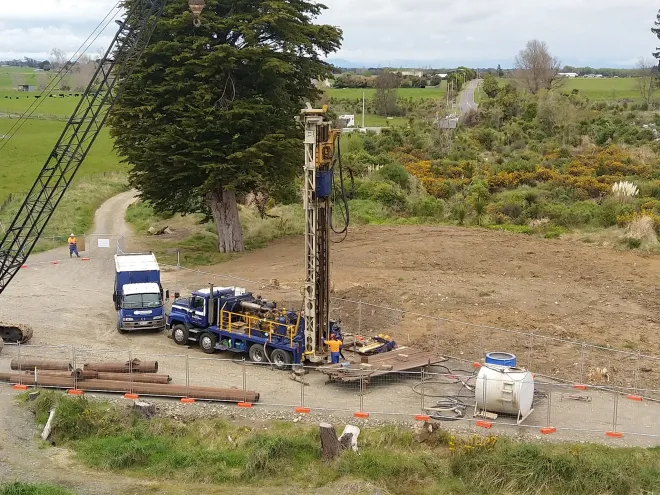
Drilling of new Tūtaenui Reservoir bore
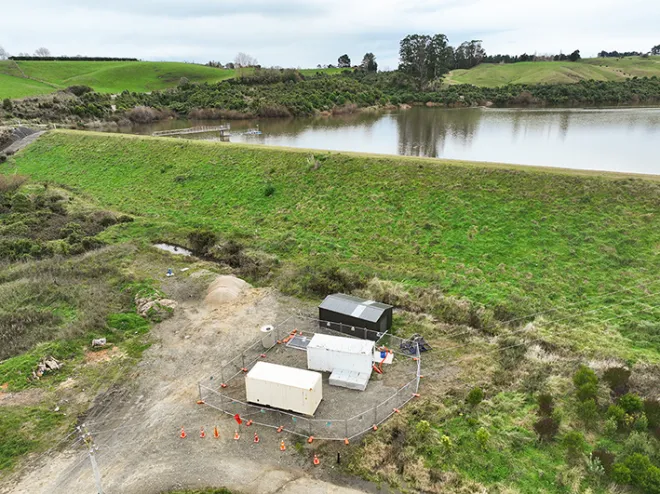
Trial nanofiltration plant at Tūtaenui Reservoir bore site
From water supply to water treatment
With a reliable source and supply found, the focus shifted to a new challenge: How to treat the water to a consistent, high standard.
Over the past two years, Council has carried out extensive testing, including trialling nanofiltration technology to remove minerals from the Tūtaenui Reservoir bore to produce drinking water that is compliant with the new NZ standards (Drinking Water Quality Assurance Rules).
Testing through spring 2025 showed that nanofiltration can effectively treat Marton’s groundwater. However, it also highlighted the scale of investment and operational complexity required to make it work reliably, particularly during peak demand periods.
“We know residents are frustrated and have been waiting years, even decades, for improvements,
“But this testing work has allowed us to build a full picture of our options and make decisions based on evidence. The last thing we want to do is replace one version of subpar water with another,” says Rangitīkei Deputy Mayor, Dave Wilson.
A practical step forward
Based on the latest testing and independent review, Council has decided not to proceed with nanofiltration at this time.
“Knowing what we know now, it would not be fiscally responsible to move ahead with that option given the cost implications for our ratepayers,” says Deputy Mayor Wilson.
Instead, Council is progressing an alternative approach designed to improve water quality in the short-medium term, while longer-term planning continues.
This alternative approach has been a collaborative effort of all those who have been working together on this project. It combines the strengths of Marton’s available water sources, supported by targeted treatment improvements. It has 3 components:
- Installing ultrasonic algae control systems in the Tūtaenui Reservoir Dams to manage algae blooms during warmer months.
- Constructing a special treatment plant at the Calico Line bore to improve the groundwater quality from that bore.
- Blending water from the reservoir dams with water from the Tūtaenui bores during peak demand.
Deputy Mayor Wilson says this alternative approach reflects how much has been learned through the Marton Water Strategy project so far.
“I’ve said from the start we need to test, test, test. This is a significant investment for our community, and we need to be confident in the decisions we make.
“We’ve gained a huge amount of knowledge about Marton’s water – what works, what doesn’t, and what’s possible.
“Importantly, we now have options available to us that weren’t on the table when we started this work in 2019. That puts us in a stronger position to deliver both immediate improvements and a long-term solution.”
The cost for the alternative approach will be paid for within the existing Marton Water Strategy budget. Council will continue to share updates as the short-term solution is finalised, including what residents can expect and when.